Forced Reuse
Design und Bildende Kunst Genf
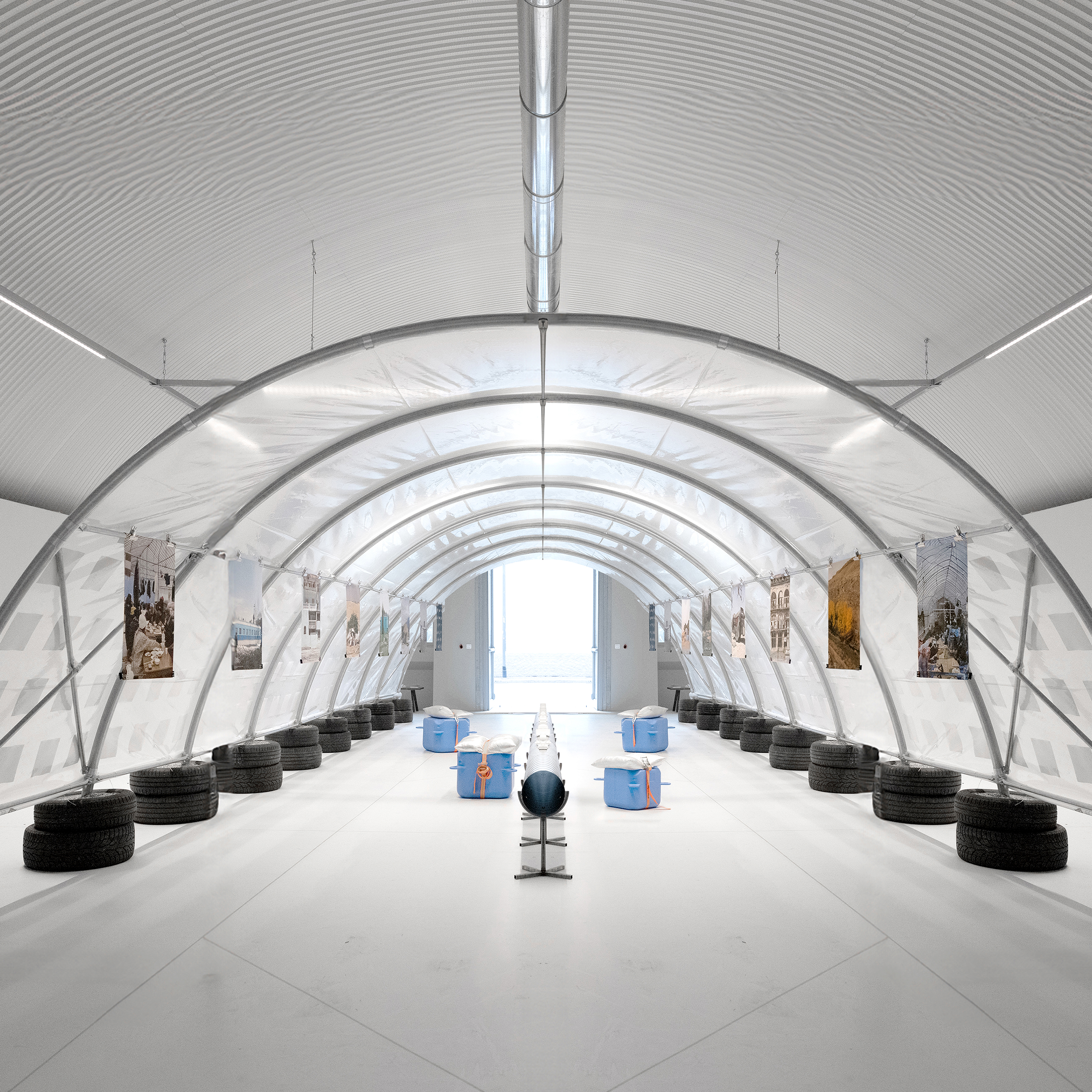
In this sense, Forced Reuse uncovers vital forms of knowledge within contemporary architectural practice that challenges the linear framework of the construction industry, where financial, bureaucratic, and legislative incentives continue to favor demolition and replacement over reuse, renovation, and renewal. Cases of forced reuse are often present within societies that have undergone a radical change of ideologies, communities facing systematic oppression or disaster, towns and villages affected by economic crises, or recovering postcolonial and postindustrial cities.
They are therefore united by a particular constellation of political and social needs that lead to practical interpretations of resources in ways that are different from their initial (industrially-assigned) purpose. These range from small-scale domestic reuse of found materials in shelters, squats, and favelas, to large-scale adaptations of grand structures (often those built by former economic or political powers) into spaces of everyday use, including residential densification or commercial repurposing. Taken together, these cases reveal a mode of practice that understands architecture as an ongoing process — one in which buildings are not conceived as static beings, but as repositories of material and spatial resources that can be continually reimagined and reused.
The project had examined more than 50 case studies, offering a panorama of global architectural ingenuity in places where human necessity outpaces bureaucratic systems.