PRISS - Paradoxes, routines and identity in sustainable services
Business, Management and Services
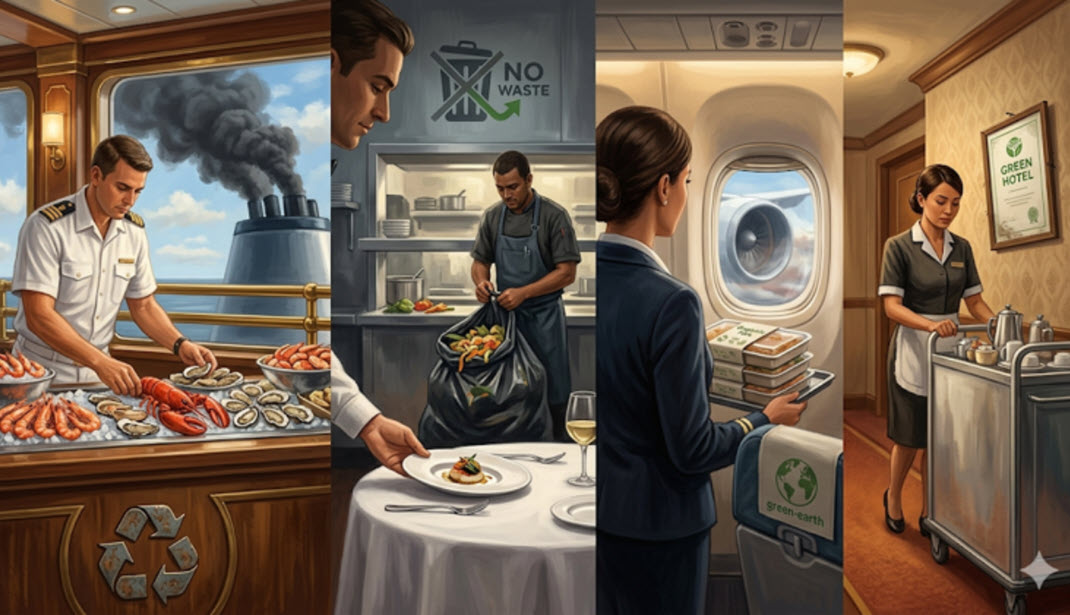
In the service sector (hotels, airlines, cruises and food services), the shift toward more sustainable practices unfolds not at the boardroom level but in daily professional work. Employees and managers must navigate structural paradoxes: sustainability mandates that coexist with demands for safety, service quality and economic viability, and that surface differently depending on who is doing the work and under what constraints.
The PRISS project, led by EHL Business School and Linnaeus University (Kalmar, Sweden), is a fundamental, theory-building project that investigates when and where these paradoxes become visible, how professionals hold competing demands together and why implementation takes hold in some settings but drifts in others. Rather than cataloguing tensions, PRISS develops mechanism-rich explanations of how sustainability contradictions are enacted, anchored and transformed across organizational levels.
By contrasting Switzerland and Sweden, two countries with distinct regulatory architectures, the project traces these dynamics across four service sectors. The empirical work combines in-depth interviews, cross-sector roundtables, participant-generated photo-narratives and documentary analysis to follow paradoxes as they unfold in real professional settings.
PRISS produces discourse-informed diagnostics and a practical inclusion index that help organizations understand where sustainability routines take hold and where they drift, offering concrete pathways to support more coherent transitions without compromising quality, safety or economic performance.