Wednesday 29th April 2026 – Scientific Forum | Life in balance
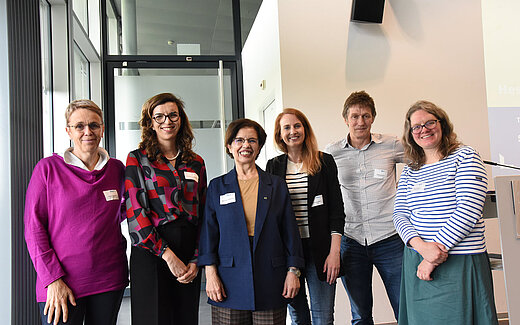
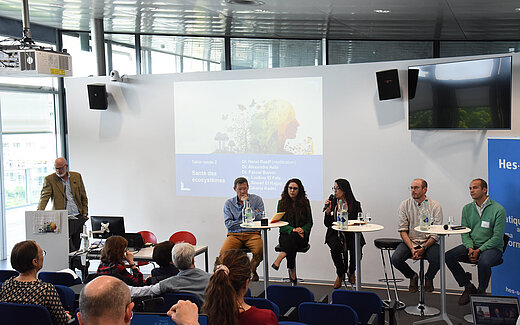
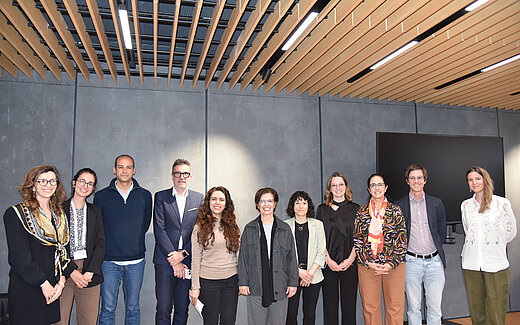
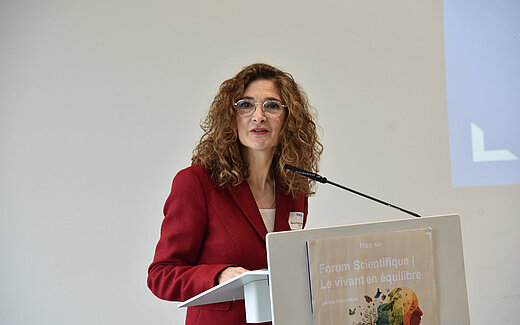
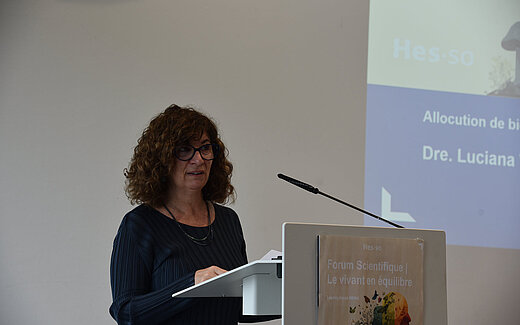
A cross-disciplinary Swiss-Moroccan meeting The Scientific Forum ‘Life in Balance: Collaborating for the Health of Humans and Ecosystems’ brought together around 50 people, including researchers, institutional representatives and professionals from the health and environmental sectors, on 29 April at EPFL. Organised by the Leading House MENA, a programme coordinated by the HES-SO on behalf of the State Secretariat for Education, Research and Innovation (SERI), the Forum followed on from a first edition held in Rabat in October 2023. Designed with a transdisciplinary approach, the event provided a space for in-depth reflection and discussion, opening the door to new horizons for collaboration between Switzerland and Morocco.
One Health: a paradigm shift towards global health The day began with an introduction to the One Health concept, presented as a scientific, ethical and societal imperative at the intersection of knowledge, responsibility and public policy. Global observation: the scarcity of natural spaces and the rapid breakdown of the barriers erected between humans and nature during the industrialisation period imply a significant increase in the risks of infectious disease transmission. In response to these challenges, the One Health approach proposes a holistic view of health, ranging from human health to that of ecosystems. It advocates a rethinking of our healthcare systems by incorporating environmental factors into medical practice. This model thus presents itself as a more ethical, moral and sustainable alternative to our current healthcare systems.
Human health: technological challenges and the science-society dialogue The first round-table discussion continued with the theme of health, focusing in particular on the role of algorithms and artificial intelligence in medicine. The researchers highlighted a twofold requirement: on the one hand, to strengthen the training and critical thinking skills of medical staff so they can master these models, in order to convey information correctly to their patients and avoid perpetuating patterns of discrimination; on the other hand, to promote patient inclusion and the development of health literacy. The relationship between the political and scientific worlds was also a key focus of the discussions, with speakers highlighting the difficulties scientists face in getting their data recognised by politicians, as well as the differences in timeframes and objectives between the two sectors. Civic and economic powers were identified as playing pivotal roles in these interactions.
Ecosystem health: breaking down silos for comprehensive protection The day continued with the second round-table discussion, which focused on ecosystem health. How can we assess ecosystem health and how it changes in response to human activity? How can we estimate the long-term impacts of pollution, particularly the interactions between pollutants and the effects of bioaccumulation? The researchers agreed on the need to review the methodologies and criteria for assessing ecosystem health, as well as the need to adopt a holistic approach to environmental protection. Cross-sectoral cooperation, involving the ‘primary beneficiaries’, was also strongly supported by the speakers, who emphasised the current need to move beyond specialised silos and adopt a broader perspective on the global issues that affect all living things.
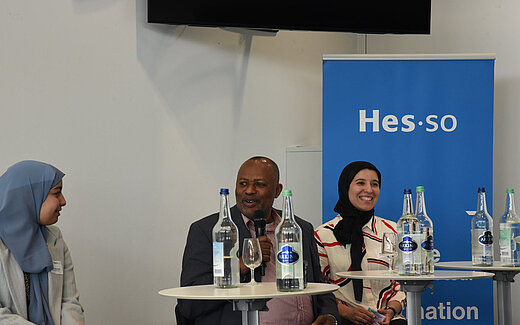
Feedback and networking The Forum concluded with a feedback session. This session provided an opportunity for researchers involved in a project supported by the Leading House to present the results of their collaboration and the value of this experience, both on a personal and scientific level. It also highlighted the role that small funding instruments can play in providing the necessary impetus for promising projects.
The numerous interactions between the audience and the speakers, encouraged by the moderators, greatly enriched the discussions.
Participants were then invited to a networking reception, during which they had the opportunity to talk with representatives from various funding and networking organisations.
Thursday 30 April 2026 – Institutional visits
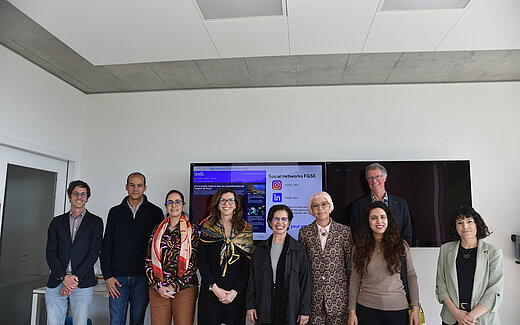
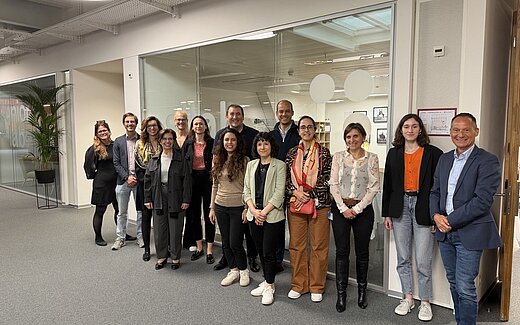
A delegation of Moroccan researchers comprising Prof. Najia Hajjaj-Hassouni, Prof. Ihsane Hmamouchi, Prof. Loubna El Fels, Prof. Souad El Hajaji and Prof. Zakaria Kadiri had the opportunity to visit a number of scientific institutions and platforms in and around Lausanne, accompanied by members of the Leading House MENA.
The day began with a visit to the Géopolis building at the University of Lausanne (UNIL), during which the delegation was able to meet with the Dean and the Vice-Dean for Research, Communication and Quality of the Faculty of Geosciences and the Environment. Following a presentation of the research projects being carried out by the Faculty, particularly in collaboration with Moroccan researchers, as well as the facilities associated with the Faculty, a fruitful discussion ensued regarding potential collaborations in the field of the environment.
The delegation then visited the EPFL campus to explore the facilities of the Central Environment Laboratory and the technology platforms of the Faculty of Life Sciences. The afternoon continued with discussions with representatives from the Centre of Excellence in Africa, the Laboratory of Construction Materials and the South-North Laboratory for Sustainable Construction and Conservation.
The final leg of the journey took the group to the Institut et Haute Ecole de la Santé La Source, where the programme began with a series of presentations: the Mental Health and Psychiatry Laboratory, the Community Health Prevention and Promotion Laboratory, the H4 Hands-on Human Health Hub, the Quality of Care and Patient Safety unit, and the Research & Innovation department. The visit to the simulated hospital marked the end of the day.
Throughout the day, discussions helped to consolidate avenues for collaboration between Moroccan universities and institutions in Lausanne.
Documents